Netherlands
The Spy Who Came in from the ColdThe Netherlands is more than a point on the map in the novel: it is the setting of Alec Leamas’s formative wartime service and, decades later, the apparently neutral destination that carries him toward his staged defection. Its history of clandestine work gives the location an enduring association with exposure, compromised networks, and the difficulty of knowing what intelligence is worth.
Wartime Service and Its Difficulties
Leamas first came to the Netherlands as a British agent during the Second World War. He had enlisted in the Engineers in 1939, then applied for specialist service abroad because he knew Dutch, German, and French and was tired of ordinary soldiering. His father had run a machine-tool agency at Leiden, and Leamas had lived in the country for nine years, giving him a personal familiarity with the place before his wartime return.
After training near Oxford, Leamas was sent to the Netherlands in 1941 and remained there for nearly two years. He later recalled that agents were lost faster than they could be replaced. The country’s lack of remote terrain made it difficult to maintain a secure headquarters or radio set; agents were continually moving and evading capture. Leamas described the work as a dirty game, contrasting it with his subsequent service in Norway, which seemed comparatively easy. In 1943 he left the Netherlands for England, and after a short period there went on to Norway.
When he was discharged in 1945, Leamas returned to the Netherlands to revive his father’s former business, but the attempt failed. He then worked with a friend in a Bristol travel agency for eighteen months before that business was sold. These postwar efforts show the country as a possible civilian home as well as a former operational field, but Leamas’s return to ordinary commercial life did not last.
The Netherlands as a Route into the Operation
Years later, the Netherlands becomes the proposed meeting place for Leamas and the client arranging a ghostwritten account of his reminiscences. Leamas has no passport, but Sam Kiever has obtained one for him; they are to fly to The Hague the following morning. The practical ease of the arrangement makes the journey appear like a conventional business transaction, even as it forms part of the larger intelligence operation.
At The Hague airport, Kiever and Leamas pass through customs without difficulty. A Dutch officer briefly checks their luggage and passports and wishes them a pleasant stay. Kiever, who had been anxious earlier, becomes talkative and jaunty during the passage from the aircraft to the reception hall. Leamas looks back through the revolving exit and notices a small, bespectacled man reading the Continental Daily Mail at a newspaper kiosk. The encounter establishes the atmosphere of observation that shadows the ostensibly ordinary journey, without clarifying the man’s identity at that point.
A Place Shaped by Intelligence Work
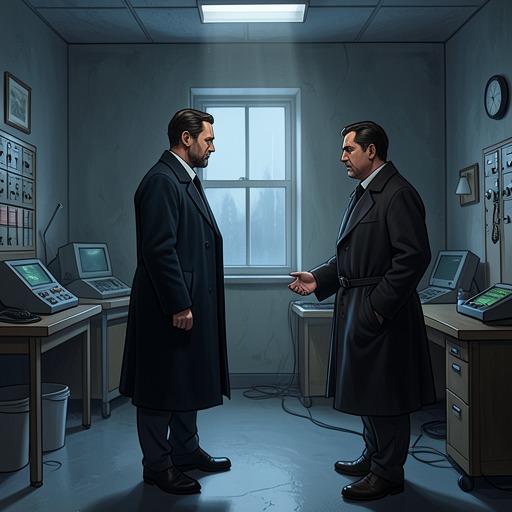
The Netherlands connects Leamas’s professional past with the novel’s later contest over the meaning of evidence. His wartime account describes an intelligence network exposed to constant movement and loss; later, during his interrogation, Peters questions whether Karl Riemeck could have obtained extensive material without a high-level collaborator. Leamas recognizes that Control had also raised the issue of Riemeck’s access. The suspicion that Riemeck had help becomes part of the larger uncertainty surrounding Rolling Stone, in which the provenance and significance of intelligence are contested rather than self-evident.
The country’s role is therefore not simply geographical. Leamas’s experience there supplies a practical memory of how clandestine systems operate under pressure, while the later Dutch journey presents a controlled, apparently routine passage into a new phase of the plot. The contrast between the dangerous wartime work he recalls and the smooth airport formalities sharpens the novel’s recurring distinction between what an operation seems to be and what it is designed to accomplish.